

When selecting a servo motor, most engineers start by calculating torque.
The torque looks sufficient, the motor size seems appropriate, and everything appears correct on paper. But once the machine starts running, problems begin to appear: vibration during operation, slow response, excessive impact during acceleration and deceleration, and unstable positioning accuracy. The drive parameters get adjusted repeatedly, yet the performance still isn't satisfactory.
After hours-or even days-of troubleshooting, the real cause often turns out not to be insufficient torque, but an improperly matched inertia ratio.
If the torque is too low, the motor simply cannot drive the load. If the inertia ratio is incorrect, the machine may never achieve stable performance no matter how much tuning is done.
Many commissioning issues that consume days or even weeks can be traced back to this overlooked factor.
In this article, we'll skip the complicated formulas and focus on the practical servo motor selection principles that matter most in real-world engineering applications.
Torque Matters, But It's Not the Whole Story
Torque is often the first parameter engineers evaluate during servo motor selection, and for good reason. Torque determines whether the motor can move the load.
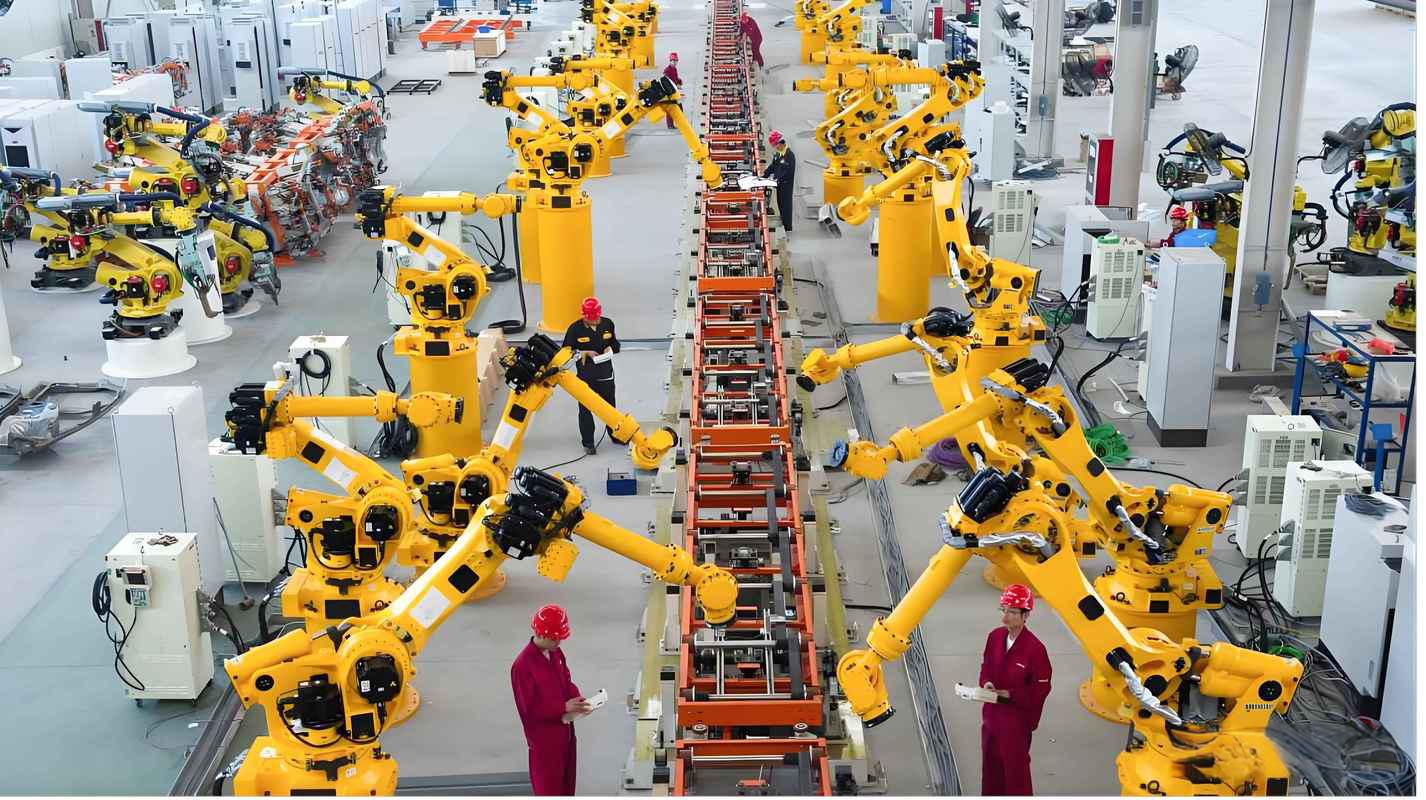
For example, a lifting platform must continuously overcome gravity, making rated torque a critical consideration. In contrast, high-speed pick-and-place machines, robotic arms, and transfer systems perform frequent acceleration and deceleration cycles, where peak torque becomes equally important.
In most industrial applications, engineers typically reserve a safety margin of approximately 1.5 times the calculated rated torque. For highly dynamic systems with frequent start-stop movements, a peak torque margin of 2 times or more is commonly recommended.
Typical Torque Reference by Application
| Application | Recommended Torque |
|---|---|
| SMT Pick-and-Place Head | Below 0.5 N·m |
| Transfer Platform | 1–3 N·m |
| Lifting Mechanism | 4–7 N·m |
| Robotic Arm Joint | 4–10 N·m |
| Heavy-Duty Rotary Table | Above 10 N·m |
However, many engineers encounter a frustrating situation:
The torque calculation is correct, sufficient safety margins are included, yet the machine still vibrates, overshoots, or struggles to achieve stable positioning.
In many cases, the answer lies in the inertia ratio.
Inertia Ratio: The Real Key to Servo System Performance
If torque determines whether a machine can move, inertia ratio determines whether it can move smoothly and accurately.
The inertia ratio is calculated as:
Inertia Ratio = Load Inertia ÷ Motor Rotor Inertia
At first glance, the concept may seem abstract. A simple analogy makes it easier to understand.
Imagine pushing an empty shopping cart versus pushing one fully loaded with heavy goods. Both can be moved, but the loaded cart is harder to accelerate, more difficult to stop, and less responsive to directional changes.
Servo motors behave in much the same way.
When the inertia ratio becomes too large, the motor must work harder to control the load, often leading to performance issues such as:
Excessive motor vibration
Residual oscillation after stopping
Difficulty increasing servo gains
Unstable positioning accuracy
Higher motor temperatures
These symptoms are frequently mistaken for tuning problems or insufficient motor power, when the real issue is often poor inertia matching.
Recommended Inertia Ratios for Common Drive Mechanisms
| Drive Type | Recommended Inertia Ratio |
|---|---|
| Ball Screw Drive | 3–5 |
| Timing Belt Drive | 5–8 |
| Gear Reducer Systems | 8–10 |
| Ideal Condition | ≤5 |
For most automation equipment, maintaining an inertia ratio below 5 significantly simplifies commissioning and improves overall system stability.
Another important consideration is gear reduction. A gearbox not only increases output torque but also reduces the reflected load inertia seen by the motor. For example, a 10:1 gearbox can theoretically reduce reflected inertia to approximately 1/100 of its original value, making it much easier for the servo system to achieve stable control.
Three Often Overlooked Factors That Affect Long-Term Reliability
Many machines perform well during initial testing but begin experiencing performance issues months later. In many cases, the root cause is not torque or inertia, but details that were overlooked during the selection stage.
Don't Focus Only on Rated Speed
Most industrial servo motors are available with rated speeds of 3000 rpm or 5000 rpm.
A common mistake is assuming that a higher speed rating automatically means better performance.
In reality, continuous torque usually decreases as speed increases. Engineers should always review the motor's torque-speed curve and verify that sufficient torque remains available at the intended operating speed.
Encoder Selection Directly Impacts Precision
For general automation equipment, 17-bit or 20-bit encoders are usually sufficient.
For robotics, precision positioning systems, semiconductor equipment, and other high-end applications, 23-bit encoders provide significantly higher feedback resolution and positioning accuracy.
Engineers should also determine whether the machine requires:
Position retention after power loss
Automatic coordinate recovery after restart
If these functions are required, an absolute encoder is generally the preferred choice.
Vertical Axes Should Always Use a Brake
This is one of the most frequently overlooked and potentially expensive mistakes.
Any axis affected by gravity should be equipped with a holding brake.
Without a brake, a power failure or emergency stop can allow the load to fall freely, potentially damaging equipment, workpieces, or creating safety risks.
The additional cost of a brake is negligible compared with the cost of an unexpected accident.
Why Are More AGVs and AMRs Adopting Low Voltage Servo Systems?
As AGVs, AMRs, autonomous forklifts, and warehouse robots become increasingly popular, traditional 220V AC servo systems are gradually being replaced by low voltage servo solutions.
Compared with conventional AC servo systems, low voltage servo motors offer several advantages:
Direct integration with lithium battery systems
Higher energy efficiency
Simplified electrical architecture
Improved operational safety
Lower overall system costs
These benefits make low voltage servo technology an ideal choice for mobile robotic applications.
To support the growing demand for intelligent logistics and autonomous mobile robots, Plutools has developed the PLT Series Low Voltage Servo Motor and Drive System.
Designed specifically for battery-powered industrial vehicles and mobile robots, the PLT Series supports 24V–72V operating voltages and delivers excellent dynamic performance, precise speed control, and reliable operation.
Typical applications include:
AGV drive systems
AMR mobile robots
Autonomous forklifts
Warehouse automation equipment
Intelligent logistics systems
Mobile service robots
Combined with CANopen communication and seamless integration with AGV drive wheel units, differential drive systems, and steering drive units, the PLT Series helps manufacturers build more efficient and intelligent motion control systems.
Servo Motor Selection Rules at a Glance
| Parameter | Recommendation |
|---|---|
| Rated Torque Margin | ≥ 1.5× |
| Peak Torque Margin | ≥ 2× |
| Ideal Inertia Ratio | ≤ 5 |
| High-Inertia Applications | Consider Gear Reduction |
| Vertical Axis | Brake Required |
| High-Precision Positioning | ≥ 20-bit Encoder |
| Mobile Robots | Low Voltage Servo Preferred |
Conclusion
Many engineers entering servo motor selection focus primarily on torque.
However, real-world project experience quickly reveals a more important truth:
Torque determines whether the load can move, while inertia matching determines whether the system can move smoothly and reliably.
At the same time, factors such as encoder selection, braking systems, and environmental protection ratings play a critical role in long-term reliability.
Addressing these considerations during the design stage is far more effective than spending days troubleshooting performance issues after installation.
For automation equipment, AGVs, AMRs, autonomous forklifts, and intelligent logistics systems, proper servo motor selection is not simply about choosing a power rating-it's about finding the optimal balance between performance, efficiency, reliability, and cost.
Looking for a Reliable Low Voltage Servo Motor Supplier?

Plutools specializes in low voltage servo motors, servo drives, AGV drive wheels, steering drive units, and integrated motion control solutions for industrial automation and mobile robotics.
Whether you are developing an AGV, AMR, autonomous forklift, or automated material handling system, our engineering team can help you select the right servo motor and drive solution for your application.


