

Introduction
Lift platforms play a critical role throughout automotive manufacturing, including body shop, paint shop, general assembly, and inspection processes. They are widely used for workpiece lifting, workstation height adjustment, production line transfer, and automated material handling.
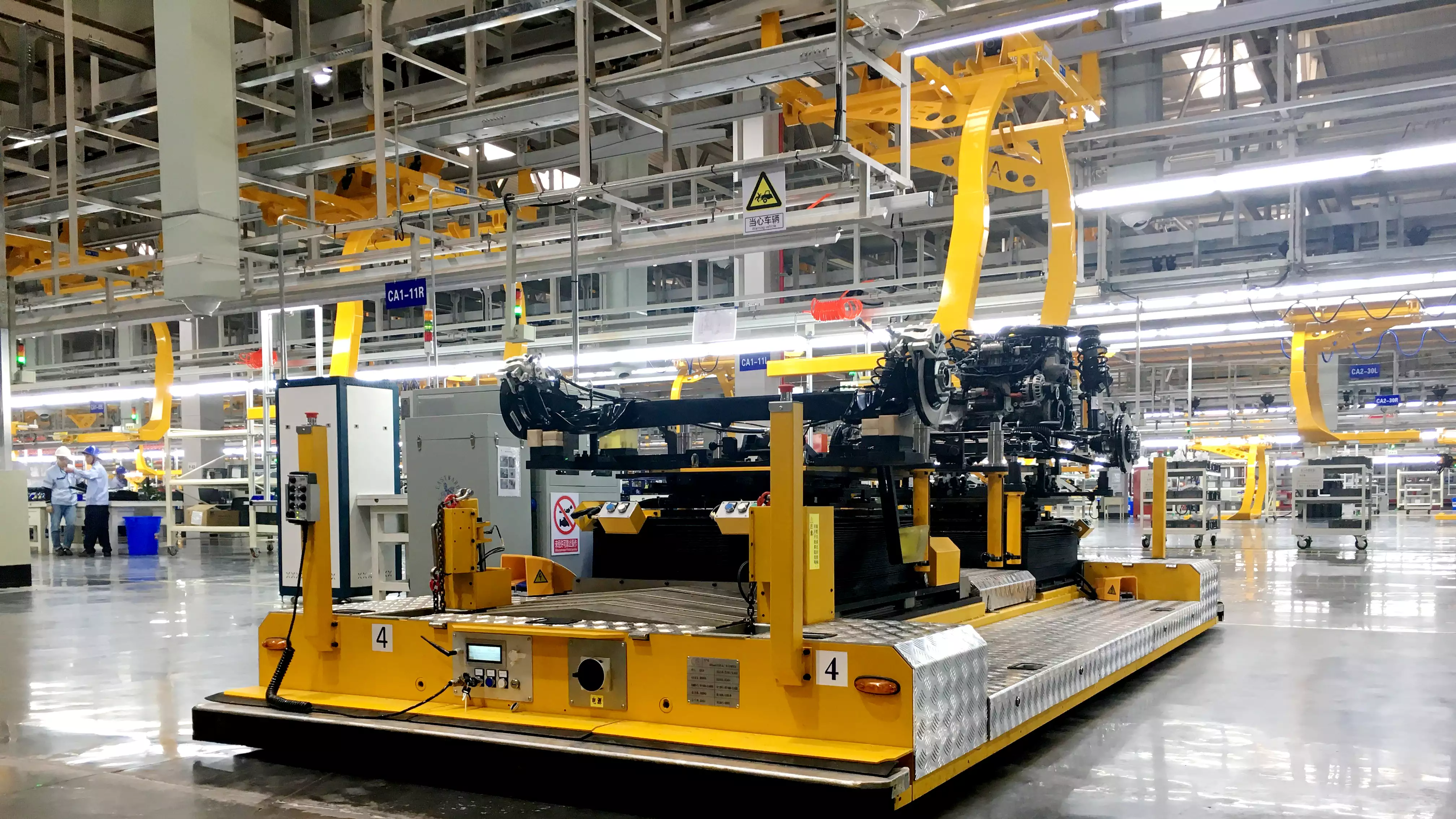
As the automotive industry continues to embrace intelligent manufacturing and electric vehicle production, manufacturers are placing higher demands on lift platforms-not only in terms of load capacity, but also positioning accuracy, operating stability, environmental adaptability, and lifecycle cost.
Today, the four most common lifting technologies used in automotive plants are hydraulic scissor lift platforms, belt-driven scissor lift platforms, ball screw lift platforms, and rigid chain lift platforms. Each solution offers distinct advantages depending on the production process and application requirements.
As a manufacturer specializing in intelligent automation equipment, Plutools provides hydraulic lift platforms, ball screw lift platforms, and lifting solutions for AGVs and AMRs. This article compares the four mainstream lifting technologies to help automotive manufacturers select the most suitable solution.
1. Hydraulic Scissor Lift Platform
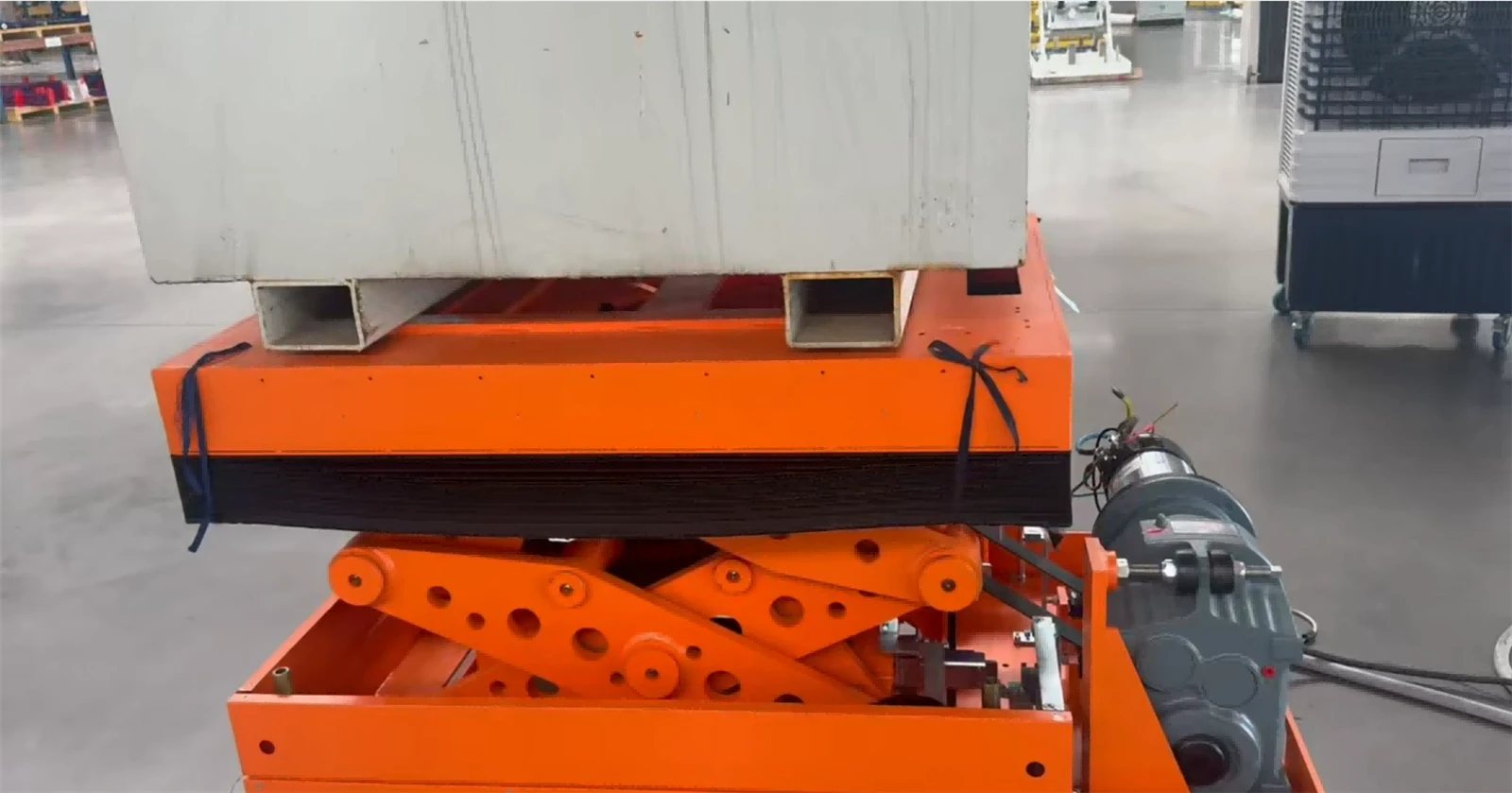
Working Principle
Hydraulic scissor lift platforms use a scissor mechanism as the primary load-bearing structure. A hydraulic cylinder extends and retracts to drive the scissor arms, enabling vertical lifting.
Thanks to their mature technology and excellent load capacity, hydraulic scissor lifts remain one of the most widely used lifting solutions in automotive manufacturing.
Typical Applications
Body Shop
Hydraulic lift platforms are commonly used for skid conveyor height transfer, welding fixture adjustment, and ergonomic lifting at body welding stations. They perform well in harsh environments with welding spatter and metal dust.
General Assembly
Typical applications include powertrain lifting, vehicle lifting, heavy-duty skid conveyors, and material transfer.
Paint Shop
They are also used in pretreatment and electro-coating processes where heavy lifting is required and cleanliness requirements are relatively moderate.
Advantages
High load capacity for vehicles, powertrains, and other heavy-duty applications.
Proven and mature technology with competitive acquisition cost.
Stable lifting performance with excellent resistance to shock loads and uneven loading.
Well suited for demanding industrial environments.
Limitations
Potential hydraulic oil leakage makes them unsuitable for highly clean environments.
Positioning accuracy is affected by oil temperature variations.
Slight platform settling may occur after extended static holding.
Regular maintenance is required, including hydraulic oil and seal replacement.
For automotive manufacturing and intelligent logistics applications, Plutools offers customized hydraulic scissor lift platforms that can be integrated with AGVs, AMRs, and automated conveyor systems while meeting specific load, stroke, platform size, and control requirements.
2. Belt-Driven Scissor Lift Platform
Working Principle
A belt-driven scissor lift platform replaces the hydraulic cylinder with an electric motor and timing belt drive while retaining the scissor lifting structure.
Typical Applications
General Assembly
Suitable for ergonomic workstations, interior assembly, lightweight component handling, and AGV lifting applications.
Paint Shop
Because there is no hydraulic oil, belt-driven lifts are well suited for clean environments where contamination must be avoided.
However, they are generally not recommended for body shops because welding heat and spatter can shorten belt service life.
Advantages
Oil-free operation with excellent cleanliness.
Low operating noise.
Smooth motion and fast response.
Simple daily maintenance.
Limitations
Limited load capacity compared with hydraulic systems.
Belt elongation and wear require periodic adjustment or replacement.
Positioning accuracy depends on belt condition.
Less suitable for high-temperature or dusty environments.
3. Ball Screw Lift Platform
Working Principle
Ball screw lift platforms typically use servo motors to drive precision ball screws, converting rotary motion into highly accurate linear movement.
Compared with hydraulic systems, ball screw drives provide significantly higher positioning accuracy and superior motion control.
Typical Applications
EV General Assembly
Widely used for battery pack installation, chassis assembly, and other high-precision joining processes.
Inspection and Calibration
Suitable for online inspection, dimensional measurement, wheel alignment, and calibration stations requiring repeatable positioning.
Automated Assembly
Ideal for integration with industrial robots, vision systems, and automated production equipment.
Advantages
Excellent repeatability and positioning accuracy.
Oil-free operation suitable for clean production environments.
Easy integration with servo control systems.
Stable positioning with virtually no platform drift during holding.
Limitations
Higher initial investment.
Increased cost for heavy-duty applications.
Sensitive to dust and metal debris without proper protection.
Long travel and high-speed applications are limited by screw characteristics.
For high-precision assembly applications, including EV battery production and automated manufacturing, Plutools provides customized ball screw lift platform solutions with servo control for accurate and reliable lifting performance.
4. Rigid Chain Lift Platform
Working Principle
Rigid chain lift platforms utilize specially designed rigid chains as the primary lifting mechanism. The chains transmit compressive force vertically while being stored compactly when retracted.
Typical Applications
Typical applications include:
High-speed automotive assembly lines
Skid conveyor transfer systems
EV battery production lines
High-reliability automated manufacturing equipment
Advantages
Combines high load capacity with excellent positioning accuracy.
Fast lifting speed suitable for high-throughput production.
No hydraulic oil contamination.
Reliable long-term performance with relatively low maintenance requirements.
Limitations
Higher initial equipment cost.
Requires precise installation and commissioning.
Preventive maintenance is essential to maximize service life.
Comparison of Four Lift Platform Technologies
| Feature | Hydraulic Scissor | Belt-Driven Scissor | Ball Screw | Rigid Chain |
|---|---|---|---|---|
| Typical Applications | Body Shop, Heavy Assembly | Light Assembly, Paint Shop | Precision Assembly, Inspection | High-End Automated Lines |
| Load Capacity | High | Low to Medium | Medium | High |
| Positioning Accuracy | Medium | Medium | Excellent | Excellent |
| Clean Environment | Fair | Excellent | Excellent | Excellent |
| Automation Compatibility | Medium | Good | Excellent | Excellent |
| Initial Investment | Low | Medium | High | High |
| Maintenance Requirement | High | Medium | Medium-Low | Medium-Low |
How to Choose the Right Lift Platform
There is no single lift platform that fits every manufacturing application. The optimal solution depends on production requirements, including load capacity, positioning accuracy, production cycle time, operating environment, and total cost of ownership.
Hydraulic scissor lift platforms remain the preferred choice for heavy-duty applications where robustness and cost-effectiveness are priorities.
Belt-driven lift platforms are well suited for clean, lightweight applications requiring quiet operation.
Ball screw lift platforms are ideal for precision assembly, inspection, and automated production where positioning accuracy is critical.
Rigid chain lift platforms offer an advanced solution for high-speed automated production lines that require a balance of heavy load capacity, precision, and reliability.
For automotive manufacturing, new energy vehicles, warehousing, and industrial automation, Plutools provides customized hydraulic lift platforms, ball screw lift platforms, and AGV/AMR lifting solutions tailored to specific application requirements, helping customers improve production efficiency, automation performance, and operational reliability.


