

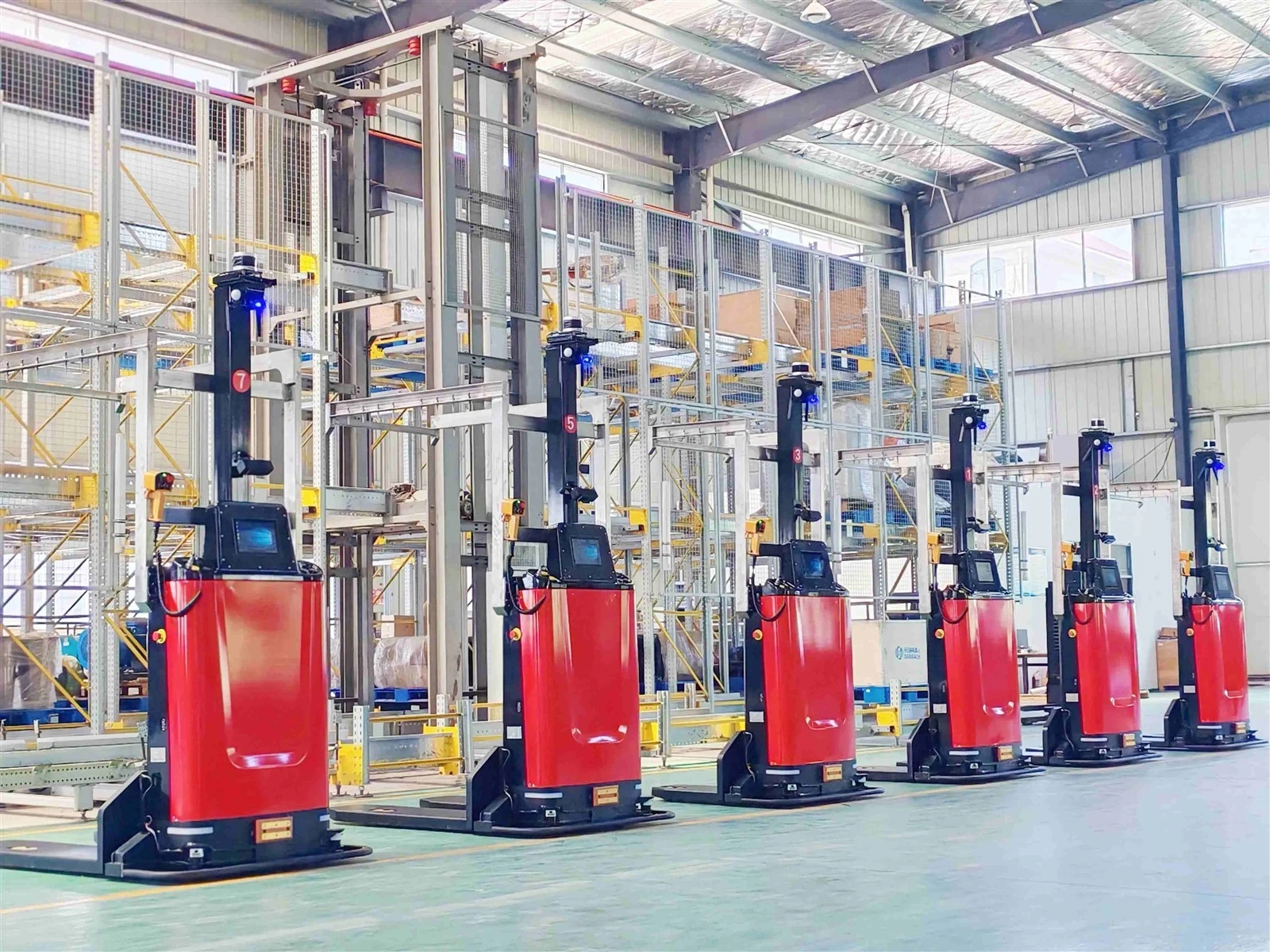
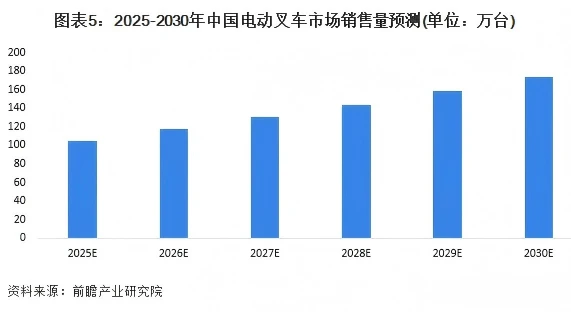
In 2025, China's forklift market reached a major milestone: electric forklifts accounted for approximately 78% of total forklift sales. This marks a clear shift in the industry. Electrification is no longer simply an emerging trend; it has become an irreversible reality.
As electrification accelerates across the forklift industry, the core power system is evolving from the traditional internal combustion engine toward the "three-electric system": the battery, electric motor, and electronic control system.
Among these three components, the motor is the core actuator that converts electrical energy into mechanical power. Its importance is difficult to overstate.
Take a 3-ton electric forklift as an example. Assuming 2,000 operating hours per year and an industrial electricity price of RMB 0.8 per kWh, every 1 percentage point improvement in motor system efficiency could save approximately RMB 2,000-3,000 in annual electricity costs. For a fleet operator, that is far from a negligible amount.
Today, we focus on one of the most easily overlooked yet fastest-evolving parts of the forklift three-electric system: the permanent magnet synchronous motor, or PMSM.
Based on publicly available industry data, this article examines four key questions:
Why is PMSM increasingly replacing induction motors?
How are forklift motor controllers evolving?
What are the latest technological developments in the motor itself?
And how are rare-earth costs and domestic substitution shaping the market?
1. The Motor: The Efficiency Bottleneck of Electric Forklifts
1.1 An Underestimated Multi-Billion-Yuan Market
Industry data indicates that China's forklift motor market exceeded RMB 8.7 billion in 2025.
An electric forklift does not rely on a single motor to perform every task. A standard 3-ton electric counterbalance forklift typically requires two to three dedicated motors:
Traction Motor:
Responsible for vehicle movement. It usually has the highest power rating and must deliver high torque at low speeds.
Hydraulic Pump Motor:
Drives the hydraulic system for lifting and tilting operations and is subject to frequent starts and stops.
Steering Motor:
Used on some forklift models for electric power steering. It has a relatively low power rating but requires extremely fast response.
Different forklift operating conditions impose very different requirements on motors. This means forklift motors are far from generic components that simply need to "work."
1.2 Efficiency Directly Affects TCO
Forklifts typically operate for long periods at low speeds with frequent acceleration, deceleration, and start-stop cycles.
Annual operating time commonly ranges from 1,500 to 2,500 hours. A 1 percentage point improvement in overall motor system efficiency can save approximately 2,500-3,500 kWh of electricity per forklift per year, equivalent to around RMB 2,000-3,000 in electricity costs.
For fleet operators, motor efficiency directly affects total cost of ownership (TCO).
This is one of the fundamental reasons why leading forklift manufacturers have increasingly shifted toward permanent magnet synchronous motors over the past three years.
2. Why PMSM Is Replacing Induction Motors
2.1 Three Key Performance Advantages
Compared with conventional AC induction motors, PMSMs offer advantages in three major areas:
Higher Efficiency:
PMSMs commonly achieve rated efficiencies above 92%, while induction motors are typically around 85%. The resulting efficiency gap can reach approximately 3-5 percentage points.
More Compact Design:
For the same power output, PMSMs can reduce motor volume by more than 30%, while overall motor weight can decrease by approximately 15%.
Lower Maintenance Requirements:
PMSMs do not require rotor copper losses, brushes, or slip rings, significantly reducing maintenance requirements.
In an induction motor, current must be induced in the rotor to generate a magnetic field. This inherently creates rotor copper losses and additional thermal management requirements.
A PMSM, by contrast, uses permanent magnets to provide excitation directly, eliminating this source of rotor excitation loss.
This advantage becomes particularly valuable in forklift applications, where motors frequently operate at low speeds and high torque.
2.2 PMSM Penetration Is Rising Rapidly
Leading manufacturers such as HELI and HANGCHA have increasingly adopted PMSM technology as standard equipment on new electric forklifts above 3 tons.
Manufacturers such as EP Equipment and Noblelift have also accelerated the transition in warehouse equipment applications.
The remaining 15-20% of the market is mainly concentrated in entry-level, cost-sensitive models and certain special operating environments, such as extremely high-temperature applications where permanent magnet demagnetization may be a concern.
Industry estimates indicate that PMSM penetration increased from approximately 64% to 85% in just four years, representing a rapid transition compared with many other industrial motor technologies.
3. Controller Evolution: SiC + FOC
The motor and controller work as an integrated system. Even a highly efficient motor cannot deliver its full potential without a properly matched control strategy.
Over the past three years, forklift electric drive controllers have evolved simultaneously in both hardware and software.
3.1 Hardware: SiC Is Challenging IGBT
Silicon carbide (SiC) power devices offer several advantages over conventional silicon-based IGBT technology:
Switching losses can be reduced by more than 50%.
Higher temperature resistance enables more compact thermal management.
System efficiency can exceed 95.6%, approximately 3.1 percentage points higher than comparable IGBT solutions.
The main limitation is cost.
SiC devices are still approximately two to three times more expensive than IGBTs. However, their adoption in forklift controllers is expected to continue increasing, particularly in higher-voltage platforms above 150 V and premium forklift models.
The technology is gradually moving from high-end electric vehicles into industrial electric drive applications, including forklifts and autonomous material-handling equipment.
3.2 Software: FOC + MPC
Field-oriented control (FOC), also known as vector control, has become a standard control strategy for many electric drive systems.
In forklift applications, FOC can help keep low-speed torque ripple below approximately 3%, while current response times can be reduced to less than 1 millisecond.
These characteristics directly affect forklift start-up, hill climbing, inching, and overall driving smoothness.
More advanced model predictive control (MPC) can further improve dynamic response. Under sudden load changes, motor speed recovery time can potentially be reduced from approximately 200 milliseconds to around 80 milliseconds.
For forklift operators, this translates into smoother lifting and driving behavior, with less noticeable hesitation or jerking during demanding operations.
3.3 Software Is Becoming an Increasingly Important Part of Controller Value
Another important trend is the increasing contribution of software to controller performance.
Software-related costs can already account for approximately 15-20% of total controller costs and are expected to continue increasing.
As advanced control algorithms improve system efficiency and performance, they can partially offset the additional hardware cost associated with technologies such as SiC.
This means the value of an electric drive system increasingly depends not only on the motor and power electronics, but also on how effectively the complete system is controlled.
4. The Latest Motor Technologies
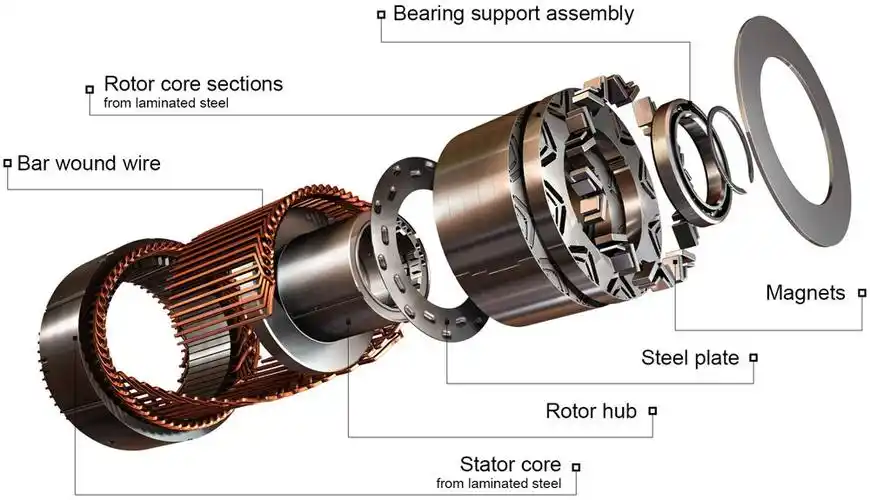
4.1 Hairpin Windings
Traditional round-wire windings typically have a slot fill factor of around 45%.
Hairpin windings use rectangular copper conductors and can increase the slot fill factor to approximately 70-82%.
The result is lower copper loss, higher power density, and improved thermal performance.
Hairpin motor technology was first widely adopted in the automotive industry, particularly in electric vehicles, and is now increasingly moving into industrial vehicle applications such as forklifts.
Industry estimates suggest that hairpin motors accounted for approximately 29% of forklift motor applications in 2025 and could reach around 39% in 2026.
4.2 Oil Cooling
Oil cooling introduces cooling oil directly into the motor to cool components such as the stator windings and permanent magnets through spraying or immersion.
This approach can reduce temperature rise by approximately 18 K under continuous peak-power operation.
This is particularly valuable for forklifts, which frequently experience short-duration, high-load conditions.
During lifting or hill climbing, improved cooling allows the motor to maintain peak output for longer periods without thermal derating.
4.3 Integrated Motor, Controller and Gearbox
The integration of the motor, electronic control system, and gearbox into a three-in-one drive unit can significantly improve packaging efficiency.
Power density can reach approximately 4.5 kW/kg, while overall system volume can be reduced by around 30%.
For forklift chassis design, a more compact drive system can free up additional space for the battery, improve weight distribution, and help lower the vehicle's center of gravity.
For AGVs and AMRs, integrated electric drive architectures can also simplify mechanical layout and reduce the number of separate components that need to be installed and controlled.
4.4 Higher Motor Speeds
Motor rated speeds are gradually increasing from approximately 6,000 rpm toward 12,000 rpm.
At the same power output, higher rotational speed allows the motor to become smaller and lighter.
Higher-speed motors can also work synergistically with hairpin windings and oil cooling to achieve higher power density.
However, this trend also creates higher requirements for bearings, gearboxes, vibration control, noise performance, and overall NVH.
5. Rare-Earth Permanent Magnets: An Unavoidable Cost Variable
PMSM technology comes with one important cost variable that cannot be ignored: rare-earth permanent magnet materials.
Permanent magnets can account for approximately 35-40% of total motor cost, meaning fluctuations in raw material prices can directly affect motor manufacturers and vehicle manufacturers.
5.1 Price Sensitivity
A 10% increase in rare-earth prices can increase motor costs by approximately 3.5-4%.
The rise in rare-earth prices in 2025 put additional pressure on motor manufacturers, with some companies experiencing a 2-3 percentage point reduction in gross margins.
5.2 Technology Response: Grain Boundary Diffusion
One major industry response is reducing dependence on heavy rare-earth elements.
Grain boundary diffusion technology can reduce the use of heavy rare-earth elements such as dysprosium and terbium by approximately 15-25% while maintaining magnetic performance.
Major magnetic-material manufacturers in Japan and China are continuing to develop and commercialize these technologies.
More aggressive alternatives, including ferrite-assisted synchronous reluctance motors and rare-earth-free motors, are also being explored.
However, for forklift applications, these technologies still face noticeable disadvantages in power density and efficiency and are not yet positioned to replace PMSMs on a large scale.
For industry participants, rare-earth prices will remain an important cost variable to monitor over the long term. However, raw material volatility alone does not fundamentally change the current direction toward PMSM technology.
6. Domestic Substitution Accelerates + AGVs Become a New Growth Market
6.1 The Domestic Supplier Landscape
Forklift electric drive systems were historically dominated by international suppliers.
Over the past three years, however, domestic substitution in China has accelerated significantly.
Inovance Technology:
Provides integrated motor and controller solutions and has expanded its presence in automated warehouse and intelligent logistics applications.
Founder Motor:
Has developed close relationships with major forklift manufacturers and has become an important domestic supplier of traction motor solutions.
Jing-Jin Electric:
Has focused on high-performance PMSM solutions, including hairpin winding and oil-cooling technologies.
The share of foreign suppliers has declined significantly compared with previous years.
The logic behind domestic substitution is also changing. It is no longer driven only by lower costs, but increasingly by a combination of technological capability, faster customization, shorter response times, and localized supply chains.
6.2 AGVs Are Becoming the Next Battlefield
AGVs and AMRs have very different motor requirements from conventional manually operated forklifts.
They require:
More precise speed control
Lower operating noise
Longer maintenance intervals
More accurate low-speed operation
Deeper communication with navigation and vehicle control systems
These requirements align particularly well with PMSM + FOC + integrated controller architectures.
As autonomous forklifts move from laboratory demonstrations toward large-scale commercial deployment, dedicated electric drive systems for AGVs and AMRs are expected to become one of the fastest-growing segments of the forklift electric drive market.
This also creates new opportunities for suppliers of AGV drive wheels, drive axles, servo motors, controllers, and other mobile robot drive components.
Conclusion: From Individual Components to Integrated Drive Solutions
Looking across the latest generation of forklift motor technologies, three major trends are becoming increasingly clear.
First, efficiency remains the core driver.
The transition from induction motors to PMSMs, from IGBTs to SiC, and from round-wire to hairpin windings is fundamentally driven by the pursuit of higher efficiency.
For fleet operators, efficiency means lower TCO.
For vehicle manufacturers, it means stronger product competitiveness.
Second, hardware and software are becoming increasingly integrated.
As the physical performance limits of electric motors continue to approach their practical boundaries, control software such as FOC, MPC, and adaptive control is becoming an increasingly important source of differentiation.
Third, domestic substitution and AGVs represent structural opportunities.
Domestic substitution is reshaping the industrial supply chain, while AGVs and AMRs are creating a new growth market for electric drive technologies.
Against this backdrop, Plutools continues to focus on electric drive and motion solutions for AGVs, AMRs, autonomous forklifts, and other mobile equipment.
Its product portfolio covers key drive components including PLT drive wheels, servo motors, controllers, drive axles, and related motion components, providing flexible building blocks for mobile robot and material-handling equipment manufacturers.
For applications that require compact packaging, precise motion control, high load capacity, or long operating cycles, the combination of efficient motors, intelligent controllers, and integrated drive architectures is becoming increasingly important.
PMSM is not the final destination of forklift electrification.
Rare-earth-free motors, axial-flux motors, in-wheel direct-drive systems, and other emerging technologies are continuing to develop.
However, over the next three to five years, PMSM + SiC controller + hairpin winding + oil cooling + integrated drive architecture is likely to remain one of the leading technology combinations for next-generation forklift electric drive systems.
For companies developing electric forklifts, AGVs, AMRs, and autonomous material-handling equipment, the key question is no longer simply which motor to choose.
It is how to build a complete, efficient, responsive, and reliable electric drive system around the motor.
That shift-from individual components to coordinated drive solutions-is likely to define the next stage of development in electric forklifts and mobile robotics.


