

As robotics moves toward higher levels of automation and intelligence, robot joints are increasingly becoming a system-level engineering challenge.
The reducer, as a core transmission component within a robot joint, is no longer evaluated only by rated torque and nominal backlash. Batch consistency, long-term precision retention, lifetime degradation, delivery efficiency, and integration with motors and control systems are becoming increasingly important.
By examining representative companies across China's robot reducer industry, this article explores the structural differences, manufacturing challenges, and development trends of harmonic, RV, and precision planetary reducers. The analysis focuses on production scale, product coverage, precision manufacturing, customer validation, and continued investment.
The companies discussed represent different technology routes and development strategies and are included for industry research purposes only. This article does not constitute a ranking.
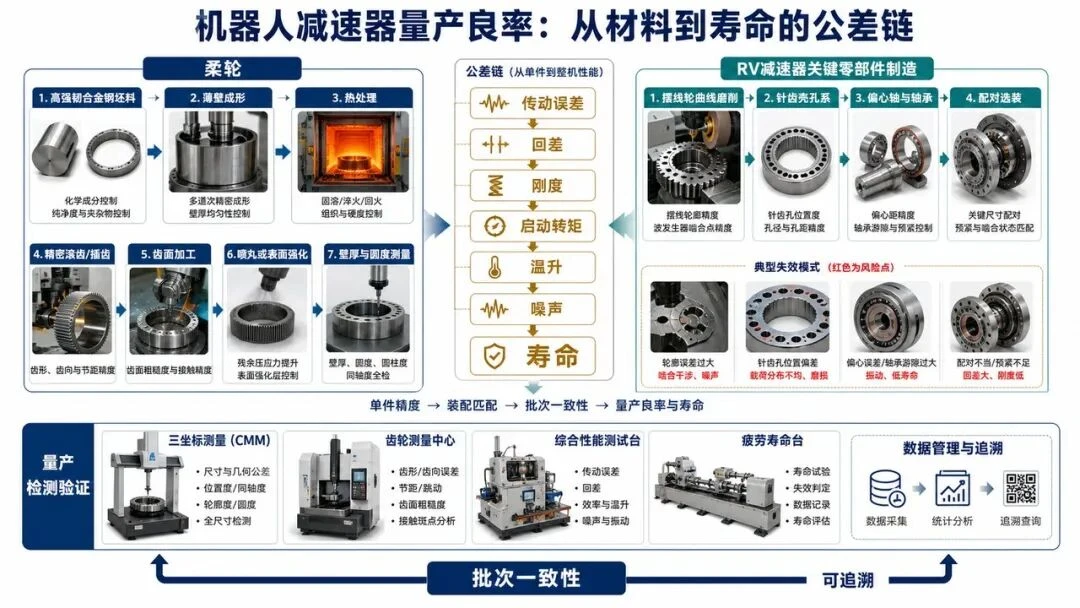
Figure 1: Representative Chinese Robot Reducer Companies - Technology Routes, Industry Positioning and Areas of Specialization
Key Takeaways
China's robot reducer industry has moved beyond the initial stage of simply replacing imported products. The next stage of competition is increasingly shifting from individual specifications to batch consistency, full-lifecycle precision, delivery capability, and integrated joint solutions.
Harmonic reducers offer compact size, low backlash, and high reduction ratios, making them suitable for collaborative robots, humanoid robots, and other space-constrained joints.
RV reducers provide high rigidity, load capacity, and impact resistance, making them widely used in high-load axes of industrial robots.
Precision planetary reducers offer high efficiency, flexible configurations, and broad application coverage across automation equipment, end-of-arm systems, and lightweight robotic applications.
As robot architectures become more integrated, the boundary between the reducer, motor, encoder, drive, and mechanical structure is becoming increasingly blurred.
For component suppliers, the competitive advantage is therefore shifting from a single component specification toward the ability to deliver reliable, repeatable, and system-compatible motion solutions.
I. Industry Overview
1. Demand: Robot Production Is Expanding Reducer Requirements
According to China's National Bureau of Statistics, China's industrial robot output reached approximately 773,000 units in 2025, representing year-on-year growth of 28.0%.
Data from the International Federation of Robotics (IFR) shows that China installed approximately 295,000 industrial robots in 2024, accounting for 54% of global industrial robot installations. The market share of Chinese robot suppliers also increased from 47% in 2023 to 57%.
The continued expansion of industrial robotics, together with the development of humanoid robots, is creating additional demand for precision transmission components in terms of both volume and product specifications.
2. Product Segmentation: Three Technology Routes for Different Applications
A reducer is installed between the servo motor and the output mechanism, converting high-speed, low-torque input into low-speed, high-torque output.
Transmission error, backlash, torsional stiffness, starting torque, noise, efficiency, and service life are all closely related to reducer performance.
image
In six-axis industrial robots, RV reducers are commonly used in high-load axes such as the shoulder, elbow, and base, while harmonic reducers and other compact precision reducers are often used in smaller wrist axes.
Humanoid robots require a more complex combination of technologies. Hip, knee, ankle, shoulder, elbow, and hand joints must be configured according to load, available space, weight, speed, and requirements such as backdrivability.
Harmonic reducers rely on the elastic deformation of a flexspline to achieve high reduction ratios while maintaining a compact form factor and low backlash.
RV reducers use cycloidal gearing and multiple points of engagement to provide high rigidity and impact resistance.
Precision planetary reducers offer high efficiency, flexible ratios, and broad specification coverage, making them suitable for a wide range of automation and robotic applications.
3. Corporate Strategies: From Specialized Components to Integrated Motion Systems
Different development strategies are becoming increasingly visible across the industry.
Some companies focus on harmonic reducers and rotary actuators. Others build their competitive advantage around gear manufacturing and large-scale RV production.
Some specialize in RV reducers and precision automation, while others integrate reducer production with machine tools, gear-processing equipment, and measurement systems.
Another group is expanding across planetary, RV, harmonic, motor, drive, and actuator products.
These approaches represent different paths toward specialization, scale manufacturing, equipment integration, and system-level integration.
For robot manufacturers, however, the key question is increasingly not simply which reducer is used, but how the motor, reducer, encoder, drive, mechanical structure, and control system work together as a complete motion chain.
4. Production Capacity: Rated Specifications Are Only the Starting Point
Rated torque and nominal backlash are only the starting point when evaluating a reducer.
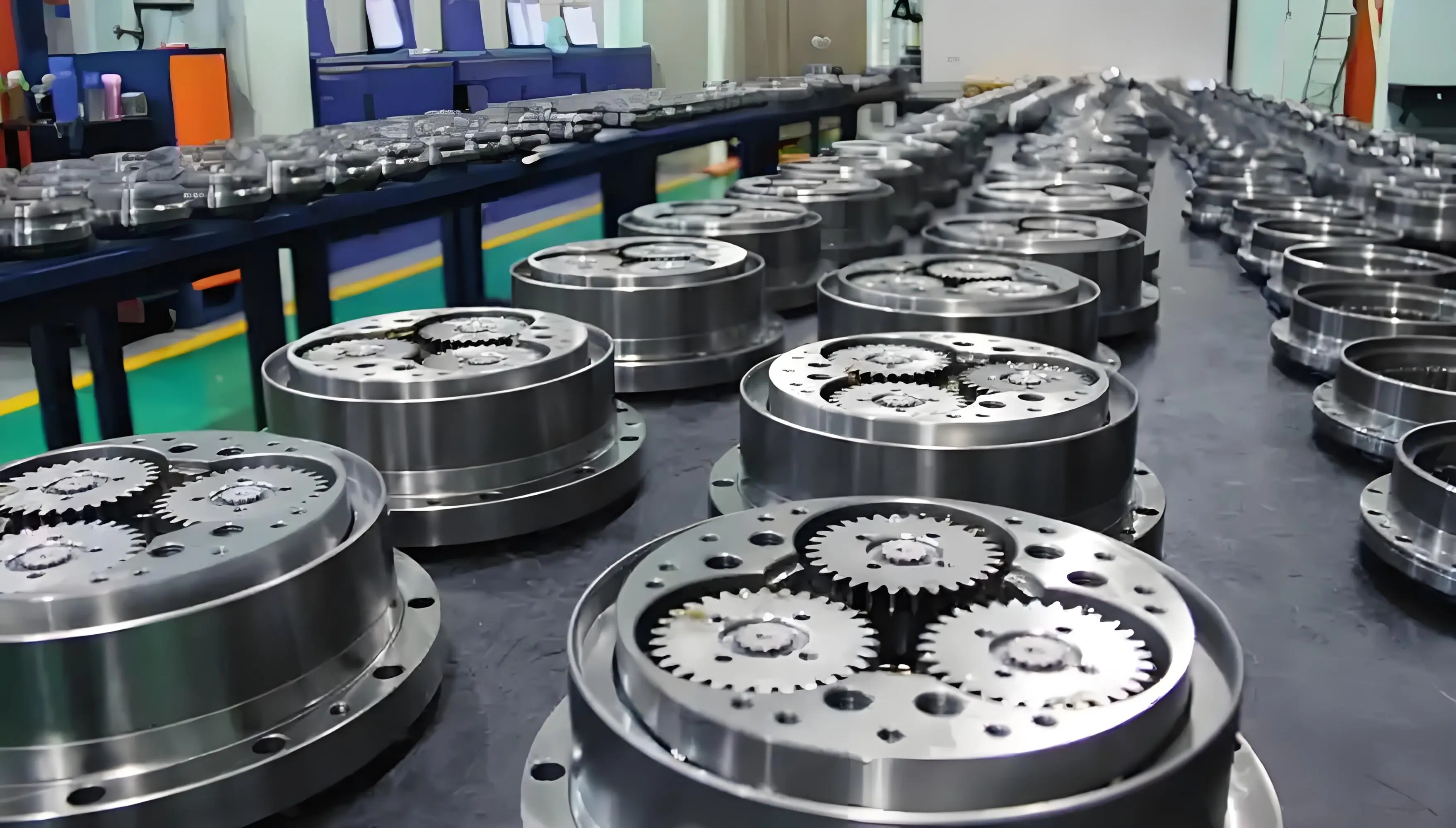
Mass-production capability must also be demonstrated through component yield rates, tooth-profile accuracy, pin-hole positioning, bearing and eccentric mechanism assembly, lubrication and sealing, noise and temperature-rise control, lifetime degradation, and robot-level validation.
Nominal production capacity does not necessarily translate into effective production capacity.
Without automated measurement, selective matching, process traceability, and reliable testing, manufacturers may still face challenges when moving from prototype quantities to stable mass production.
5. The Industry Chain: Materials, Manufacturing Equipment and Robotic Applications
The upstream supply chain includes high-strength alloy steels, bearing steels, precision castings and forgings, pins and rollers, flex bearings, seals, lubricants, cutting tools, and abrasives.
The manufacturing process requires precision turning and milling, hobbing, shaping, gear grinding, cycloidal profile processing, heat treatment, surface treatment, coordinate measurement, and gear inspection equipment.
Downstream applications include industrial robots, collaborative robots, humanoid robots, CNC rotary tables, semiconductor equipment, lithium-battery production equipment, and general automation.
In mobile robotics, companies such as Plutools focus on the complementary motion components that connect motors, drives, encoders, gear reduction, steering, and load-bearing functions.
Plutools' product portfolio includes servo motors, drive wheels, drive axles, drives, encoders, and integrated motion components designed for AGV, AMR, and other mobile automation applications.
Its TEC-series servo motors cover a broad range of power requirements, supporting applications that require high speed, frequent acceleration and deceleration, precise positioning, and continuous operation.
When motors, reducers, encoders, and drives are properly matched, the overall motion system can achieve better control response, smoother operation, and more predictable performance.
This also highlights an important shift in the industry: the competitive advantage of a motion-component supplier increasingly depends on system compatibility and engineering integration, rather than on a single component in isolation.
6. New Boundaries: From Reducers to Integrated Actuation
Humanoid robots are pushing the boundaries of traditional reducer design.
A humanoid robot contains numerous joints, has strict weight and space constraints, and may require low noise, low starting torque, high efficiency, and a certain level of backdrivability.
These requirements are encouraging the integration of reducers with frameless torque motors, encoders, brakes, drives, and torque sensors into compact rotary actuator assemblies.
As the industry scales, the unit price of individual components may face increasing pressure. At the same time, system-level integration creates new value through thermal design, control adaptation, sensor calibration, EMC compatibility, commissioning, and application engineering.
Industrial robots remain an important validation environment for reliability.
Automotive welding, material handling, die casting, and other applications involve high loads, high cycle rates, and long periods of continuous operation. Reducers must maintain precision and rigidity under impact loads, offset loads, and temperature rise.
Manufacturers that can accumulate long-term lifetime data, failure-mode analysis, and batch-level statistics can build a stronger foundation for platform-level customer validation.
Figure 2: Harmonic, RV and Precision Planetary Reducers - Structural Differences, Performance Trade-Offs and Typical Applications
II. Key Dynamics Shaping the Industry
1. Robot Growth and Increasing Joint Counts Create Additional Demand
A typical six-axis industrial robot requires multiple precision reducers, while humanoid robots may contain significantly more degrees of freedom.
Although some joints can use direct-drive motors, ball screws, or tendon-driven mechanisms, rotary joints such as the hip, knee, shoulder, and elbow can still create substantial demand for compact transmission systems.
Market growth is therefore driven by both robot shipments and the increasing number of motion axes and integrated actuators per robot.
2. Harmonic, RV and Planetary Reducers Will Continue to Serve Different Roles
Harmonic reducers provide compact dimensions, low backlash, and high reduction ratios, making them suitable for compact and relatively lightweight robotic joints.
RV reducers offer high rigidity, load capacity, and impact resistance, making them suitable for heavy-duty industrial robot axes.
Precision planetary reducers combine high efficiency with flexible ratios and cost structures, making them useful in end-of-arm applications, automation equipment, and other applications where extremely low backlash is not always the primary requirement.
Rather than replacing one another completely, these three technologies are likely to continue serving different parts of the robotics and automation market.
3. From Individual-Part Accuracy to the Complete Tolerance Chain
Flexspline wall thickness, tooth profile, wave-generator geometry, cycloidal profile accuracy, pin-hole position, eccentric bearing clearance, and housing concentricity can all contribute to transmission error and backlash.
Mass production therefore requires more than precision machining of individual components.
Manufacturers need process control, selective matching, measurement databases, and end-of-line testing to establish a direct relationship between component dimensions and complete reducer performance.
4. Lifetime Performance Matters Beyond Factory Specifications
A reducer that meets its initial backlash specification does not necessarily maintain the same performance throughout its service life.
Alternating stress in the flexspline, micro-pitting on gear surfaces, bearing fatigue, lubricant degradation, and seal aging can gradually change stiffness, friction, noise, and transmission accuracy.
Lifetime testing therefore needs to incorporate realistic load profiles, temperature conditions, forward and reverse cycles, and impact conditions while tracking performance degradation over time.
5. Integrated Actuators Are Reshaping the Value Chain
The integration of motors, reducers, encoders, brakes, and drive electronics can significantly simplify mechanical design and commissioning.
For robot manufacturers, an integrated actuator can reduce component-selection complexity and shorten the time required for mechanical and control-system integration.
For component manufacturers, this creates an opportunity to participate earlier in robot architecture and joint design.
The same trend can be seen in mobile robotics, where integrated drive modules combine functions such as motor drive, gear reduction, steering, encoder feedback, and load support into a compact assembly.
For AGV and AMR manufacturers, this approach can simplify system integration and reduce the engineering workload associated with matching individual components.
6. Cost Reduction Comes from Manufacturing Efficiency
Reducer cost is influenced by materials, machining time, tool wear, heat treatment, bearings, assembly, and testing.
Near-net-shape manufacturing, dedicated automation, in-process measurement, tool compensation, platform-based components, and optimized selective matching can improve yield and reduce unit cost while maintaining reliability.
Simply reducing machining or testing processes may lower short-term manufacturing costs while increasing the risk of field failures and after-sales costs.
III. Manufacturing Challenges and Where Value Is Created
1. Flexsplines: Precision and Fatigue in Thin-Walled Components
The flexspline is one of the most demanding components in a harmonic reducer.
It is typically manufactured from high-strength, high-toughness alloy steel and must simultaneously achieve dimensional accuracy, tooth hardness, and fatigue resistance within a thin-walled cup-shaped structure.
Material cleanliness, inclusions, and residual stress after heat treatment can affect crack initiation.
Precision turning, hobbing or shaping, shot peening, and surface treatment can further influence wall-thickness consistency and tooth-root conditions.
The flex bearing also operates under cyclic deformation, making raceway geometry, cage design, lubrication, and material selection important factors in noise and service life.
2. Cycloidal Gears: Heat Treatment and Matching Behind Multi-Point Engagement
The core challenges of an RV reducer are concentrated in the interaction between cycloidal gears, the pin housing, eccentric shafts, crankshafts, and support bearings.
Cycloidal profile errors and pin-hole positional accuracy directly influence the load distribution across multiple engagement points.
Carburizing and quenching, nitriding, and other surface-hardening processes must balance surface hardness, core toughness, and dimensional deformation.
Precision grinding and matched assembly after heat treatment are critical to achieving low backlash and high rigidity.
These processes also require substantial manufacturing equipment, tooling capability, process knowledge, and accumulated experience.
3. Lubrication and Sealing: Small Components with a Large Impact
Lubrication and sealing are often overlooked when discussing reducer performance, yet both can have a significant impact on service life.
At low temperatures, lubricant viscosity must not create excessive starting resistance. At high speeds and loads, the lubricant must maintain stable film strength, wear protection, and thermal performance.
Base-oil viscosity, thickener type, extreme-pressure additives, and compatibility with sealing materials can all influence temperature rise and lifetime.
For humanoid robots operating close to people, requirements related to leakage, odor, noise, and maintenance intervals may become increasingly important.
4. Measurement and Test Benches: The Infrastructure Behind Mass Production
Mass-production measurement is itself a critical manufacturing capability.
Cycloidal profiles, tooth geometry, roundness, concentricity, and pin-hole positioning require CMMs, gear measurement centers, roundness testers, and dedicated inspection tools.
Complete reducer test benches need to evaluate transmission error, backlash, efficiency, starting torque, torsional stiffness, noise, temperature rise, and fatigue life.
The real manufacturing advantage comes when these measurements are connected to tool compensation, heat-treatment batches, assembly parameters, and serial-number traceability.
This creates a closed-loop manufacturing system in which measured performance can continuously feed back into production.
5. Process Integration: From Tooth Profile to Lifetime Data
The value of a precision reducer does not come from a single manufacturing step. It comes from the coordination of the entire process chain.
Tooth-profile design and error compensation rely on conjugate tooth geometry, cycloidal modification, load distribution analysis, and finite-element simulation.
Machining tolerances, elastic deformation, temperature rise, and assembly preload need to be considered during the design stage.
Precision machining equipment and tooling determine the dimensional stability of gear grinding, shaping, turning and milling, cycloidal profile processing, and in-process measurement.
Machine cycle time, tool life, and automatic compensation directly influence production yield and unit cost.
Heat treatment and surface engineering must balance hardness, toughness, residual stress, and deformation across carburizing, quenching, tempering, nitriding, and shot peening.
These factors are particularly important for flexspline fatigue resistance and RV gear durability.
Figure 3: Robot Reducer Mass Production - From Alloy Materials and Precision Machining to Heat Treatment and Lifetime Validation
Bearings, rollers, lubricants, and seals collectively determine friction, load capacity, noise, and temperature rise.
Assembly and selective matching require coordinated control of preload, phase, clearance, and concentricity.
Automated assembly, measurement databases, and serial-number traceability can convert operator experience into repeatable production processes.
End-of-line performance testing and lifetime data then address the indicators that robot manufacturers care about most: full-lifecycle accuracy, backlash after impact, temperature rise, noise, and long-term reliability.
IV. Representative Companies and Development Paths
1. Harmonic Reducers and Rotary Actuators: Leader Harmonious Drive Systems
Leader Harmonious Drive Systems focuses on harmonic reducers, mechatronic joints, rotary actuators, and precision transmission components.
In 2025, the company reported revenue of approximately RMB 571 million and disclosed batch deliveries to international leading robot customers, growing demand from embodied-intelligence applications, and continued development of rotary actuators.
Its capabilities are centered on harmonic transmission technology, materials, tooth-profile engineering, and mass production.
Future areas to monitor include high-load lifetime performance, actuator production scale, and overseas customer expansion.
2. RV Scale Manufacturing: HuanDong Technology and Shuanghuan Driveline
HuanDong Technology operates within the Shuanghuan Driveline system as a precision reducer platform, covering industrial robot RV reducers, precision gears, and transmission systems.
According to its IPO prospectus, its 2025 RV reducer production capacity was approximately 137,600 units, with production of 148,800 units and sales of 141,400 units. Capacity utilization reached 108.14%, while RV reducer revenue was approximately RMB 403 million.
Its foundation is large-scale manufacturing and gear-processing capability.
Areas to monitor include product mix, overseas market development, and expansion into lightweight robotic joints.
image
Figure 4: RV Reducer Cross-Section - Cycloidal Gears, Crankshafts, and Main Bearing Transmission System
3. Specialized RV Manufacturing: Nantong Zhenkang
Nantong Zhenkang manufactures E- and C-series RV reducers, precision automation components, and related products.
Its products focus on precision, rigidity, load capacity, and service life, with long-term experience in industrial robotics and automation.
Because its latest publicly available sales and financial data are relatively limited, areas of interest include customer validation, specification expansion, production-line automation, and high-load operating data.
4. Equipment and Manufacturing Integration: Qinchuan Machine Tool and Qinchuan High Precision
Qinchuan Machine Tool and Qinchuan High Precision cover RV reducer development, manufacturing, and sales, while also providing gear-processing machines and inspection equipment.
Qinchuan High Precision has developed six major RV product series - E, C, F, RD, N, and GS - covering more than 50 specifications and over 200 reduction ratios, with applications for robots ranging from 5 kg to 1,000 kg.
Its combination of reducer manufacturing, in-house equipment, and testing capabilities provides an example of vertically integrated manufacturing.
Key areas to monitor include effective production capacity, customer structure, and mass-production cost.
5. Multi-Technology Products and Intelligent Actuators: Zhongda Leader
Zhongda Leader covers precision planetary, RV, and harmonic reducers, as well as motors, drives, and intelligent actuator units.
In 2025, its precision reducer revenue was approximately RMB 252 million, while intelligent actuator revenue reached approximately RMB 392 million.
The company's product portfolio illustrates the broader industry shift from individual components toward integrated motion units.
Future areas to monitor include high-end reducer precision and lifetime performance, customer adoption of joint modules, and production economics at scale.
Figure 5: Precision Planetary Reducer - A Flexible Transmission Solution for Lightweight, End-of-Arm and Automation Applications
6. Motor, Drive and Motion Module Integration: Plutools
The development of integrated motion systems is creating another important layer of value beyond the reducer itself.
Plutools focuses on motion components and drive systems for AGVs, AMRs, mobile robots, and industrial automation, with products covering drive wheels, servo motors, drives, drive axles, encoders, and integrated motion components.
Its TEC-series servo motors cover frame sizes from 60 to 180 and support incremental and absolute encoders, optional brakes, and Tamagawa communication protocols.
The motors are designed for applications requiring high speed, frequent acceleration and deceleration, precise motion control, and continuous operation.
For mobile robots, these capabilities can be combined with gear reduction, steering mechanisms, encoder feedback, and load-bearing structures to form integrated drive modules.
This approach reduces the engineering work required to select and match individual components and allows robot manufacturers to focus more directly on vehicle architecture and application performance.
As robotics moves toward more compact and integrated actuators, the ability to coordinate motor + reducer + encoder + drive + mechanical structure is becoming increasingly relevant across both mobile robotics and robotic joint applications.
7. Global Technology and Market Benchmarks: Nabtesco, Harmonic Drive Systems and Neugart
International suppliers such as Nabtesco, Harmonic Drive Systems, and Neugart represent established technology routes in RV-type precision reducers, harmonic transmission, and precision planetary reducers.
Their experience provides benchmarks in long-term lifetime data, global customer support, high-end specifications, and application engineering.
For Chinese suppliers, opportunities include localized engineering support, cost competitiveness, rapid customization, and integrated motion solutions.
Specific market positions, however, need to be evaluated separately by product category, application, and customer.
Horizontal Comparison of Representative Chinese Companies
The following table compares five groups of representative Chinese companies across product route, production foundation, core capabilities, and areas requiring further validation.
| Company | Core Product Route | Production & Financial Foundation | Core Capabilities | Areas to Monitor |
|---|---|---|---|---|
| Leader Harmonious Drive Systems | Harmonic reducers, rotary actuators, mechatronic joints | 2025 revenue of approximately RMB 571 million | Harmonic transmission materials, tooth-profile engineering, and mass-production experience; batch deliveries to international leading robot customers | High-load lifetime, actuator production scale, overseas customer expansion |
| HuanDong Technology / Shuanghuan Driveline | Industrial robot RV reducers, precision gears | 2025 RV capacity of 137,600 units; sales of 141,400 units; capacity utilization of 108.14%; RV revenue of approximately RMB 403 million | Large-scale manufacturing and gear-processing capabilities | Product mix, overseas markets, lightweight joint expansion |
| Nantong Zhenkang | E/C-series RV reducers, precision automation components | Limited publicly available sales and financial data | Precision, rigidity, load capacity, and long-term industrial robot experience | Customer validation, specification expansion, production automation, high-load operating data |
| Qinchuan Machine Tool / Qinchuan High Precision | Six RV product series, 50+ specifications; gear-processing and inspection equipment | Applications covering robots from 5 kg to 1,000 kg | Equipment integration and closed-loop manufacturing capabilities | Effective capacity, customer structure, mass-production cost |
| Zhongda Leader | Planetary/RV/harmonic reducers + motors, drives and intelligent actuator units | 2025 precision reducer revenue of approximately RMB 252 million; intelligent actuator revenue of approximately RMB 392 million | Multi-technology portfolio and expansion from components to integrated motion units | High-end precision and lifetime, joint-module adoption, production economics |
Data sources: Company prospectuses, annual reports, and publicly disclosed information
Statistical period: 2025
Data basis: Company-disclosed figures
V. What to Watch Next
The next stage of China's robot reducer industry will depend increasingly on whether manufacturers can turn technology selection, material processing, precision machining, assembly and matching, lifetime validation, and actuator integration into repeatable and scalable manufacturing capabilities.
Several areas deserve continued attention:
Actual industrial robot and humanoid robot shipments and their resulting demand for harmonic, RV, and planetary reducers;
The development of rotary actuators, high-load harmonic products, and overseas customer programs;
RV production capacity, utilization, product mix, average selling prices, and customer concentration;
Customer validation, specification coverage, automation, and high-load lifetime data among specialized RV manufacturers;
Effective production capacity, equipment integration, and robot customer adoption within vertically integrated manufacturers;
The development of precision reducers and intelligent actuator units;
The adoption of integrated motion systems in mobile robotics and collaborative robot applications;
Supply and validation of flex bearings, main bearings, alloy steels, pins, and specialized lubricants;
Batch-level statistics for transmission error, backlash, starting torque, temperature rise, noise, and lifetime degradation.


