

1. Yaskawa Invests $180 Million in U.S. Manufacturing Facility
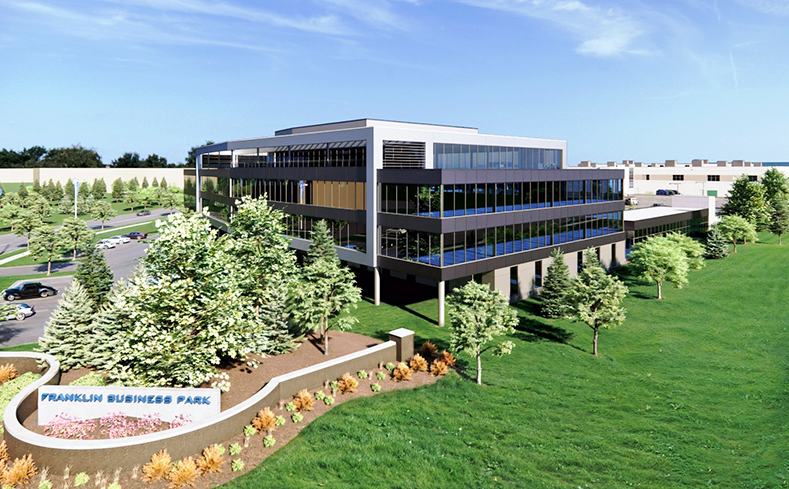
Japanese industrial robot giant Yaskawa Electric has launched construction of a new 74,000 m² factory in Wisconsin, marking the first local production base for Japanese industrial robots in the U.S. The new site will consolidate production and relocate the North American headquarters. Spanning a 10-year phased investment and seven buildings, the facility will focus on robots for semiconductor and medical applications, as well as high-torque servo motors, aiming to double Yaskawa's U.S. business within a decade.
2. Panasonic Launches Motor Plant in Hangzhou with 140,000 Tons CO₂ Reduction per Year
Panasonic's high-efficiency, low-noise motor project, with a total investment of RMB 1.09 billion, has officially started operations in Qiantang, Hangzhou. The 77-acre smart factory adopts fully automated winding and magnetic circuit optimization technology, achieving noise levels as low as 18 dB (quieter than a library). At full capacity, the plant will produce 16 million motors annually, supporting 5 million home appliances or industrial devices, with a yearly carbon reduction equivalent to planting 760,000 trees.

3. Han's Laser and Bosch Rexroth Co-Build Smart Manufacturing Ecosystem
The two companies signed a strategic agreement in Shanghai to integrate Bosch Rexroth's hydraulic servo systems with Han's Laser's kilowatt-class cutting technology. They aim to co-develop intelligent production lines with ±0.01 mm precision, focusing on overcoming bottlenecks in EV battery housing welding and aerospace component processing.

4. Musk Criticizes LiDAR Again: Pure Vision Is the Optimal Path
In a recent interview, Tesla CEO Elon Musk stated that "the physical characteristics of cameras and LiDAR conflict," arguing that LiDAR wavelengths interfere with CMOS imaging in cameras. Tesla's favored solution-AI neural networks paired with 8MP cameras-has reportedly achieved 10 million accident-free miles in North America, sparking renewed debate over intelligent driving strategies.

5. Jiangsong Technology Seeks RMB 1.053 Billion in IPO for PV Equipment Expansion
Jiangsong Technology, a maker of smart equipment for photovoltaic cells, has filed for a ChiNext IPO. The company's screen printing machines boast a ±5 µm accuracy (1/14 the width of a human hair), with Estun robotic arms accounting for 35% of its procurement cost. The IPO proceeds will fund a precision processing base in Suqian, designed to support 50 GW of annual solar cell capacity.

6. Huamin Invests RMB 100 Million in Tiantai Robotics for Harmonic Drive Localization
Huamin Co. has made a strategic investment in Tiantai Robotics, a core component supplier for collaborative robots, targeting localization of harmonic reducers. Tiantai's independently developed steel-gear harmonic drive now exceeds 12,000 hours of service life, breaking the monopoly of Japanese firms in high-load (25kg+) applications.

7. Digua Robotics Unveils Brain-like RDK S100 Development Kit
The RDK S100 integrates motion control and AI decision-making in a single SoC (Renesas RZ/V2H), delivering 32 TOPS of computing power at just 15W power consumption. It supports plug-and-play with multiple sensors like LiDAR and event cameras, shortening development cycles by 60%. The kit has already been pre-ordered by companies such as Ecovacs and Narwal.

8. HKU Achieves 120 km/h Obstacle Avoidance for Drones
Professor Zhang Fu's team at the University of Hong Kong developed a system using real-time 3D point cloud modeling and cloud-based reinforcement learning, enabling drones to fly through dense forests at 120 km/h while avoiding obstacles with 5 cm precision and only 8 ms response delay. The technology, now under PCT patent application, boosts emergency delivery efficiency by 300%.

9. Robot Adoption in Germany Surges to 77%
A recent survey by Deutsche Messe shows that over 80% of German employees support robots taking over high-risk tasks such as welding and hazardous material handling. At Volkswagen's Wolfsburg plant, human–robot collaboration stations have increased to 2,300, resulting in a 41% year-on-year drop in workplace injuries, demonstrating the safety benefits of automation.

10. Collaborative Robots Enter Food Processing Industry
Japan's Fuji Oil Group has deployed 20 Yaskawa collaborative robots. With soft grippers capable of handling fragile items like tofu without damage, daily output has increased to 200,000 boxes. This has reduced labor costs by 35% and brought product damage rates down to zero.


